12 Minutes Read / Last Updated: April 2026
Mahé is the kind of island that rewards exploration. It’s the largest of the Seychelles’ 115 islands, yet compact enough that you can drive from one end to the other in well under an hour — if the roads cooperate, that is. From the lively capital Victoria with its colourful market and Creole architecture, to the north-coast stretch of Beau Vallon beach, the mountain forest trails of Morne Seychellois National Park, and the remote southern bays like Anse Intendance and Baie Lazare, the island has extraordinary variety packed into roughly 27 kilometres of length.
But here’s the thing about Mahé — it’s a place where transport choices can genuinely make or break your holiday experience. Take the wrong approach, and you’ll spend a disproportionate chunk of your budget on taxis or find yourself stranded at a beach when the last bus has already gone. Get it right, and you’ll move around the island with ease, freedom, and even a sense of local adventure.
This guide covers every realistic way to get around Mahé as a tourist — the iconic blue SPTC public buses (yes, including the prepaid travel cards you’ll need), the taxi scene and the rise of the LinkUp app, and the freedom of renting your own car on these scenic but narrow island roads. Whether you’re a budget traveller, a family explorer, or a luxury resort guest, there’s a transport option here that fits exactly how you want to experience Mahé.
Option 1 — The SPTC Public Bus: Mahé’s Affordable Island Network:

Let’s start with what is arguably the most characterful way to explore Mahé — the public bus. Operated by the Seychelles Public Transport Corporation (SPTC), the island bus network is genuinely impressive for a small island nation. Over 1,600 bus journeys run daily, covering more than 106 routes across Mahé, and approximately 55,000 people — both locals and visitors — use the service every single day. For tourists who are comfortable with a bit of planning, the buses are not just affordable, they’re a wonderful window into everyday Seychellois life.
The iconic SPTC buses are large, easily identifiable, and painted in blue and white. You’ll spot them frequently on the main coastal road and threading through Victoria’s streets. They are the heartbeat of island transport for local residents and increasingly for savvy tourists who know how to use them.
The Golden Rule — No Cash on Board:

Before anything else, there is one critical fact every tourist must know: SPTC buses are completely cashless. You cannot pay with coins, notes, or any currency directly to the driver. Every passenger must use an SPTC Travel Card — a prepaid smart card that is tapped against a reader when boarding. If you step onto a bus without a card, you will be turned away. There are no exceptions.
This is exactly the prepaid bus card system you may remember from your visit — and it’s still the way the system operates today, with some handy modern upgrades added in recent years.
Getting Your SPTC Travel Card:
Purchasing a travel card is straightforward and should ideally be one of the first things you do after arriving on Mahé. Cards are available at a wide network of resellers spread across the island, including shops and SPTC offices in: Victoria, Beau Vallon, Anse Royale, Baie Lazare, Grand Anse Mahé, Glacis, Anse Boileau, Cascade, Takamaka, and many more neighbourhood locations. The Travel Plus Shop near the airport bus stop also sells them, so you can pick one up right after landing if needed.
SPTC Visitor Card Pricing:
SPTC offers a dedicated Visitor Card specifically designed for tourists. This is the card you want, as it provides unlimited travel options that suit a holiday itinerary rather than a daily commute. The current pricing structure is as follows:
- Store Value Card (base card): SCR 50 (~$3.50 USD) — a standard card you top up with any amount you need
- Wristband Card: SCR 100 (~$7 USD) — the same functionality as the card but in a convenient wristband format, great for beach days
- 1-Day Unlimited Travel: SCR 100 (~$7 USD / ~€5)
- 4-Day Unlimited Travel: SCR 198 (~$14 USD / ~€12)
- 8-Day Unlimited Travel: SCR 363 (~$25 USD / ~€22)
- Single Ride: SCR 10–12 (~$0.70–$0.85 USD) per trip
8-Day Unlimited Bus Pass≈SCR 363≈$25 USD
For context, the value here is remarkable. An 8-day unlimited pass for roughly $25 USD means you can travel the length and breadth of Mahé as many times as you like for less than the price of a single taxi ride across town. For budget travellers or anyone planning to use buses as their primary transport method, the unlimited passes offer outstanding value.
The SPTC App — A Modern Upgrade:
One of the most useful additions in recent years is the official SPTC mobile app, available free on both the Apple App Store and Google Play. The app does several things that make navigating the bus system as a tourist dramatically easier. It lets you plan your journey with real-time route information, manage your travel card account, top up your card balance directly using a credit card (no need to find a shop), and even pay your bus fare using a QR code on your phone — scan it at the card reader on any bus displaying the QR payment symbol on the windscreen.
The Reddit community for Seychelles travel has flagged this as a genuine game-changer for tourist bus users: “Download the Seychelles bus app called SPTC app. You can pay with your phone by loading funds to the app via credit card, no account required!” This means even if you haven’t yet picked up a physical card, your phone can serve as your ticket.
Key Bus Routes on Mahé — Where Can You Go?

The SPTC network covers a comprehensive range of destinations across Mahé. Victoria’s main bus station acts as the central hub, and many routes radiate outward from there. Understanding the key corridors helps you plan your day trips effectively.
The most frequently used routes for tourists include the following connections. Victoria to Beau Vallon — this is one of the most popular tourist corridors, linking the capital to the island’s most famous beach on the northwest coast. The journey takes approximately 15–20 minutes and buses run frequently. Victoria to Anse Royale — the southeast coastal town is a lovely half-day destination, approximately 20–25 minutes from Victoria by bus. Victoria to Grand Anse — approximately 50 minutes, running via the southwest coast. Victoria to Baie Lazare and Takamaka — the quieter southern bays are reachable in 45–55 minutes from Victoria, making them feasible as day trips from a central hotel.
A key point to understand is that Victoria is the connection hub for almost everything. If you’re staying at Beau Vallon and want to go south, you’ll typically need to take a bus to Victoria first, then transfer to a southbound route. This adds time but is part of the bus experience on Mahé.
SPTC Bus Operating Hours:
Buses on Mahé operate generally between 05:30 and 20:00 daily. Frequency varies significantly by route — the busiest corridors like Victoria to Beau Vallon and the airport road run every 5–15 minutes during peak hours, while quieter rural routes may run every 40–60 minutes. On Sundays and public holidays, services are reduced, so always check timetables through the SPTC app or website before planning a Sunday excursion by bus.
The Big Limitation — Large Luggage is Not Allowed:
This is the single most important practical constraint of the SPTC bus system for tourists: large suitcases, rolling luggage, and oversized bags are strictly not permitted on board. Drivers will only allow small backpacks or handbags that fit in your lap or between your feet. This means the bus is not a viable option for your initial airport-to-hotel transfer if you’re travelling with standard tourist luggage. However, once you’re settled at your accommodation, it’s perfect for daily excursions around the island.
Who Is the Bus Best For?
The SPTC bus is ideal for budget-conscious travellers who want to stretch their holiday funds further, solo explorers and backpackers who enjoy immersing themselves in local life, and tourists staying for a week or more who want a cost-effective way to access different parts of the island day by day. It’s also genuinely enjoyable — riding along the coastal road with the windows open, passing fishing villages and palm-fringed coves, is an experience in itself.
Option 2 — Taxis in Mahé: Convenience at a Price:
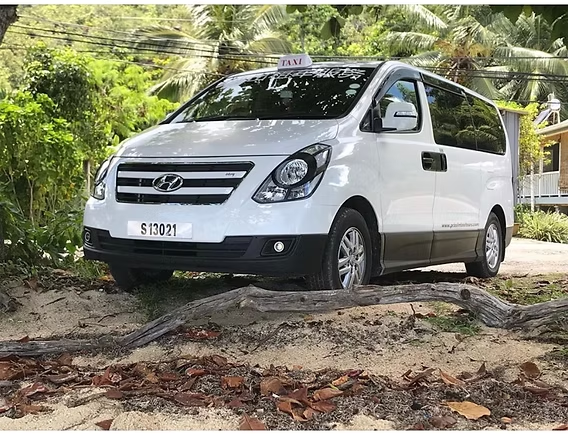
Taxis have long been the default transport solution for tourists in Mahé who want door-to-door convenience without the commitment of renting a car. They’re widely available, drivers are generally helpful and knowledgeable about the island, and many drivers double as informal tour guides who can share local knowledge about beaches, restaurants, and hidden spots worth visiting.
How the Taxi System Works on Mahé:
Unlike major cities where taxi rides are routine transactions, Seychelles taxis operate with some nuances that tourists should understand from the outset. There is no single centralised taxi company in Seychelles — drivers work independently, operating from taxi stands positioned at key locations around the island: the airport, Victoria’s main streets, Beau Vallon, and in front of larger hotels and shopping areas.
Critically, not all taxis in Mahé use meters consistently. While taxis do have an official metered rate structure (more on that below), it is common practice — particularly for tourist journeys — for drivers to quote a flat fare. This makes negotiating the price before you get in the vehicle absolutely essential. Agreeing on the fare upfront avoids any ambiguity at your destination, and knowing the approximate going rates gives you a strong foundation for that conversation.
Taxi Fare Reference Guide for Mahé:
The official meter-based rate structure for taxis in Seychelles provides a useful benchmark, even when fares are negotiated:
- Base starting fare: approximately SCR 106–150 (~$7–$10 USD / ~€7)
- Rate per kilometre: approximately SCR 80 (~$5.50 USD / ~€5)
- Waiting rate per hour: approximately SCR 110 (~$7.50 USD)
In practical tourist terms, the common journey fares you’ll encounter around Mahé look something like this:
- Victoria to Beau Vallon: approximately SCR 400–500 (~$27–$34 USD / ~€25–€31)
- Victoria to Airport (SEZ): approximately SCR 315–470 (~$21–$32 USD)
- Beau Vallon to South Mahé Resorts: approximately SCR 700–1,000 (~$48–$68 USD)
- Short in-town trips (Victoria area): approximately SCR 150–250 (~$10–$17 USD)
- Half-day island tour with a driver: typically negotiated at SCR 1,200–2,000+ depending on route and duration
Night-time journeys and public holidays may attract a surcharge, so factor this in if you’re returning from a late dinner or evening event.
Taxi Tips for Getting a Fair Deal:
Taxi pricing in Seychelles is something travellers frequently discuss in online forums, and it’s fair to say experiences vary. The overwhelming consensus is to always agree on the price first, and if the first quote feels high, it’s perfectly acceptable to politely counter-offer or check with another driver. Having a rough idea of the fares listed above significantly helps with this.
It’s also worth knowing that some taxi drivers in Mahé offer full-day island tours — a genuinely fantastic way to see the entire island with someone who knows every beach, viewpoint, and shortcut. These tours are negotiable and typically range from SCR 1,500 to SCR 2,500 for a comprehensive day. If you can agree on a good price, this is arguably the most enjoyable and educational way to experience Mahé’s highlights in a single day without the stress of driving yourself.
The LinkUp App — Seychelles’ Answer to Ride-Hailing:

Here’s the answer to your question about taxi apps — yes, there is now a taxi app for Seychelles, and it’s called LinkUp. This is a relatively recent development that has brought ride-hailing convenience to the island, similar in concept to Uber or Bolt, though specifically designed for the Seychelles market.
LinkUp was developed by a Seychellois entrepreneur and connects riders with registered, licensed taxi drivers across Mahé. It’s available as a free download on both the Apple App Store and Google Play Store. The app allows you to book a taxi, track your driver in real time, and pay by cash, card, or in-app wallet. Beyond taxis, LinkUp has also expanded into food delivery and other local services, making it a useful multi-purpose app to have on your phone during your stay.
In terms of tourist feedback, reviews are mixed but leaning positive for basic taxi functionality. Positive reviewers highlight the convenience and competitive pricing compared to walk-up taxi fares: “Very good app. Cheap taxi fares in Seychelles. I used it to go around Mahé island and it works very well.” Some negative reviews mention app reliability issues and credit refund difficulties, which is worth keeping in mind. The general advice from experienced travellers is to use LinkUp as a supplementary option — handy when you want a quick ride and don’t want to negotiate, but always have a backup plan (and a local taxi driver’s number saved in your contacts) in case the app doesn’t immediately produce a driver in your area.
Coverage has expanded significantly since launch, with the app now serving most tourist zones across Mahé. However, in remote parts of the island or during very late hours, driver availability may be limited.
Option 3 — Renting a Car: The Freedom Option

For many tourists visiting Mahé — particularly those staying for a week or more, those travelling with family, or those with a strong desire to explore the island independently — renting a car is simply the best decision they can make. No timetables, no negotiations, no waiting. You go where you want, when you want, and stop wherever the scenery demands it.
Why a Rental Car Makes Sense on Mahé:
Mahé has a wonderful network of paved roads that circle the island and cross over its mountainous interior. These roads connect every major beach, viewpoint, national park entrance, and village on the island. Many of the most spectacular spots — the hilltop lookouts over the coast, the quiet bays tucked between granite boulders, the trailheads into the rainforest interior — are either inaccessible by bus or require a long walk from the nearest bus stop. A rental car unlocks all of this effortlessly.
The cost argument is also compelling. A single taxi round trip from Beau Vallon to the south coast can cost $60–$100 USD. A compact car rental for the day typically costs $47–$74 USD. Do that maths over a 7-day trip with multiple beach excursions, and the rental car pays for itself multiple times over.
Where to Rent a Car on Mahé:
Car rental companies operating on Mahé include both international brands and well-regarded local operators. Major options include Europcar, Avis, Hertz, Doffay Car Rental (consistently one of Tripadvisor’s top-rated rental options on the island), K-Rent-A-Car Seychelles, Papa Car Rental, Kreol Cars, and Maki Car Rental. Rental desks for the main operators are available at or near Seychelles International Airport (SEZ), and many companies also offer pickup and delivery arrangements to your hotel.
Online pre-booking through platforms like KAYAK, Rentalcars.com, or directly through operator websites is strongly recommended, particularly during the peak seasons of December–January and July–August when vehicle availability tightens considerably.
What You Need to Rent a Car:

The documentation and eligibility requirements for renting a car on Mahé are as follows. You must hold a valid national driving licence from your home country. Your licence must have been held for a minimum of two years. The minimum rental age is 21 years old, and some companies apply a young driver surcharge for those under 25. An International Driving Permit (IDP) is not strictly legally required in Seychelles if your existing licence is in English, but it is advisable if your licence uses non-Roman script and is not in English or French. A credit card is needed for the rental deposit, held as a pre-authorisation. Your passport is required as photo identification.
The Most Important Driving Fact — Keep Left:
Seychelles follows left-hand traffic, meaning you drive on the left side of the road and overtake on the right. If you’re from the UK, Australia, South Africa, India, or Japan, this will feel completely natural. If you’re from the USA, continental Europe, or most of Asia, this will require conscious adjustment for the first 20–30 minutes, after which most drivers find it becomes intuitive.
Navigating Mahé’s Roads — What to Really Expect:

This is where honest, practical information matters most, because Mahé’s roads have a character all their own that you need to be mentally prepared for. The coastal ring road is generally well-paved and reasonably wide, making for pleasant driving with spectacular sea views. However, the roads that cut across the island’s mountainous interior — including the main cross-island road connecting the east and west coasts — are a very different story.
These mountain roads are narrow, often single-lane in places, steeply graded, and wind through dense forest with tight blind bends and very limited crash barriers in some sections. Travellers who have driven these roads describe them vividly online: “The mountain roads are terrifying — almost no guard rails, and some are quite narrow.” That said, the same travellers almost universally say the experience is worth it and entirely manageable if approached with patience and appropriate speed.
The essential rules for driving Mahé’s interior roads confidently are to drive slowly — always — particularly on steep downhill sections and around blind corners; to use your horn on blind bends to alert oncoming vehicles (this is common local practice and expected); to give way generously to larger vehicles like buses and trucks; to avoid driving at night if possible, as the lack of street lighting on mountain roads makes visibility very poor; and to observe speed limits strictly, which are generally 40 km/h in towns and villages and 65 km/h on open roads.
One famously local piece of advice from rental companies: do not park under coconut palm trees. Falling coconuts can and do cause vehicle damage, and most rental agreements exclude coconut-related damage from their insurance cover.
Road Conditions and Practicalities:

Mahé’s main coastal roads and most tourist-route roads are well-maintained and paved. The island is small enough that a GPS or offline map app (Google Maps or Maps.me with Seychelles downloaded for offline use) is all you need for navigation — most rental cars do not include a built-in GPS. Nearly all rental vehicles are automatic transmission, which is particularly helpful for drivers less accustomed to left-hand driving.
Petrol stations are present in Victoria and at various points around the island. It’s sensible to fill up whenever you’re passing through Victoria or a major town rather than letting the tank get too low, as stations in the rural south and far north can be less frequent.
Parking in Victoria can be tight during business hours. Beau Vallon and most beach destinations have adequate informal parking areas. The golden rule — avoid driving through Victoria during morning rush hour (7 AM–9 AM) and afternoon rush hour (3:30 PM–5 PM) when the town’s limited road space gets thoroughly congested.
Insurance and Vehicle Inspection:
Before driving away from any rental company, do a thorough walk-around of the vehicle and document any existing damage — scratches, dents, or marks — with photos on your phone. Ensure this documentation is noted on your rental agreement. Most standard rental packages include basic collision damage waiver (CDW) insurance, but the excess (deductible) amount can be significant. Check whether your travel insurance policy or credit card provides additional rental car coverage, which can effectively reduce or eliminate your excess liability.
Comparing Your Options — At a Glance:
Choosing between bus, taxi, and rental car on Mahé ultimately comes down to four factors: your budget, your trip length, your luggage situation, and how independently you want to travel. Here’s how the three options stack up across the most common tourist scenarios:
| Factor | 🚌 SPTC Bus | 🚕 Taxi / LinkUp | 🚗 Rental Car |
|---|---|---|---|
| Cost | Ultra-low — from SCR 10 per ride | Moderate to high — $20–$70+ per journey | $47–$120/day, but replaces multiple taxis |
| Ease of use | Moderate (requires card, planning) | Easy — walk-up or app | Easy once you’re on the road |
| Luggage | ❌ Small bags only | ✅ Any luggage | ✅ Any luggage |
| Flexibility | Limited by routes and timetable | High — any destination | Total freedom |
| Best for | Budget explorers, light travellers | Short trips, airport runs | 4+ day stays, families, island explorers |
| Evening / night | ⚠️ Last buses around 20:00 | ✅ Available late | ✅ Drive anytime (with care) |
| No driving required | ✅ Yes | ✅ Yes | ❌ You must drive |
Practical Tips for Getting Around Mahé:
A few universal pieces of advice apply regardless of which transport method you choose, and keeping them in mind will make your island experience smoother from day one.
Download the SPTC app and the LinkUp app as soon as you arrive and have your SIM card or data sorted. Having both on your phone means you always have a bus option and a taxi option at your fingertips, giving you maximum flexibility on any given day.
Save a local taxi driver’s number in your contacts early in your trip. Ask your hotel reception to recommend a reliable driver — most accommodation staff have trusted contacts they regularly recommend. Having a personal driver’s number is invaluable for late-night returns, early-morning transfers, or situations where apps and buses aren’t immediately available.
Get your SPTC travel card on day one, even if you plan to primarily rent a car or use taxis. At SCR 50 for the base card plus a modest top-up, it costs very little and gives you a backup option for local exploration — a spontaneous bus ride along the coast or a cheap trip into Victoria for the morning market.
Plan around bus operating hours if buses are your primary transport. The last buses on most routes run around 20:00. If you’re planning a dinner or sunset activity on the opposite side of the island from your hotel, factor in how you’ll return — either bus (if timing works) or a pre-arranged taxi pickup.
Carry water and snacks when exploring by bus or on foot. Not every bus stop has nearby facilities, and Mahé’s tropical heat means hydration is genuinely important, especially if you’re waiting at an exposed roadside stop.
Use offline maps. Whether you’re driving, busing, or walking between stops, having Google Maps or Maps.me downloaded for offline use means you always know where you are and how far the next stop or destination is.
A Note on Exploring Beyond the Bus — Mahe’s Hidden Corners:
One of the most rewarding things you can do in Mahé is combine transport modes throughout your stay. Use buses for the well-trodden routes — Victoria, Beau Vallon, and Anse Royale — and use taxis or a rental car for days when you want to venture into the less-accessible southern bays, mountain viewpoints, or hiking trailheads. The island rewards spontaneity, and having multiple transport tools at your disposal means no corner of Mahé is out of reach.
The beaches of Anse Major (accessible by boat or a scenic coastal walk), the tea plantation and viewpoint at Morne Blanc, the quiet bay at Anse Soleil, and the breathtaking panorama from the Sans Souci road through the national park — these are experiences that transform a standard beach holiday into something genuinely memorable. All of them are most accessible with a rental car or a trusted taxi driver who knows the island.
Frequently Asked Questions:
Is there an Uber or Bolt in Seychelles? Neither Uber nor Bolt operates in Seychelles. The local alternative is the LinkUp app, which connects riders with registered local taxi drivers and offers app-based booking, real-time tracking, and digital payment options.
Can I use my travel card from a previous Seychelles visit? SPTC travel cards do not expire, and any remaining balance stays on the card. If you’re returning to Mahé and still have an old card, check whether it still works at a bus station — if valid, simply top it up again. If you no longer have your old card, pick up a new one at any SPTC reseller.
Are taxi drivers trustworthy in Seychelles? The overwhelming majority of taxi drivers in Seychelles are honest, helpful, and genuinely good company. The main area where friction occasionally occurs is price negotiation — always agree upfront, know the approximate fares, and be politely firm. The drivers themselves are often knowledgeable and enthusiastic about sharing their island with visitors.
Do buses run to all beaches on Mahé? SPTC buses cover most of the populated coastal areas and many beach zones, but not every single beach is directly on a bus route. Some famous beaches like Anse Major require a boat or a hike regardless of how you travel. For the popular beaches of Beau Vallon, Anse Royale, and Grand Anse Mahé, buses are a perfectly viable option.
Can I rent a car for just one or two days? Yes, most car rental companies offer single-day and multi-day rentals with no minimum stay requirement. Even a one-day rental specifically for a south-coast exploration or a cross-island mountain drive can be excellent value compared to the equivalent taxi fares.
Conclusion:
Getting around Mahé is genuinely one of the more enjoyable logistics challenges in international travel — because every option has its own charm. The SPTC bus immerses you in island life and lets your holiday funds stretch remarkably far. The taxi gives you instant, conversation-filled point-to-point convenience, with the added option of the modern LinkUp app for a more familiar ride-hailing experience. And the rental car hands you the full freedom of the island, unlocking every hidden beach, mountain road, and sunset viewpoint at your own pace.
Use the information in this guide to mix and match these options throughout your stay, and Mahé will reveal itself to you in all its extraordinary, winding, ocean-fringed glory.
Exploring the Seychelles? Visit RoamingPlanner.com for comprehensive guides on staying connected, getting around, and making the most of every island in this Indian Ocean paradise.
Tags: getting around Mahé, Seychelles transport guide, SPTC bus Seychelles, Seychelles taxi app, LinkUp app Seychelles, rent a car Mahé, Seychelles travel tips, Mahé island travel, bus card Seychelles, driving in Seychelles